There is a window. Most teams miss it.
It opens the moment a lead submits.
And it closes faster than most teams realize.
Within the first five minutes, the lead is still in the moment.
They filled out a form.
They made a decision to inquire.
The problem they wanted solved is still at the front of their mind.
After five minutes, something shifts.
Not dramatically.
Not all at once.
But the context starts to change.
They moved on to the next tab.
They got a call from someone else.
They started second-guessing whether now is the right time.
By the time your team calls at the two-hour mark,
the conversation is different.
Not impossible.
Just different.
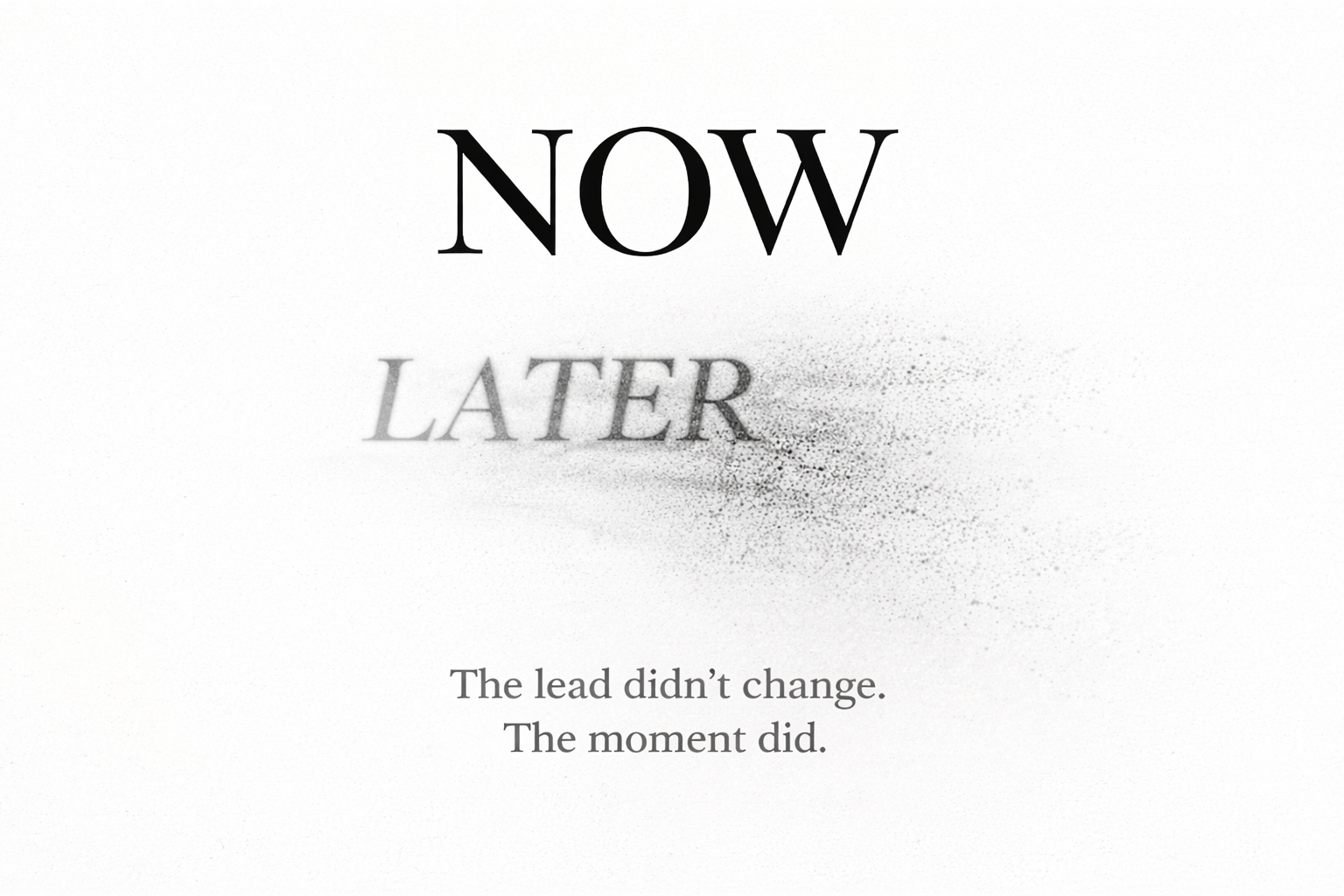
The lead didn't change.
The moment did.
Most teams don't measure this.
They measure whether the lead got called.
Not when.
So the data shows contact attempts.
It doesn't show the gap between submission and first dial.
And that gap is where a significant portion of set rate lives.
The research on this is consistent across industries.
Contact rate drops sharply after the first five minutes.
It drops again after the first hour.
By the time you reach the 24-hour mark, you are working a fundamentally different lead than the one that submitted.
A meaningful percentage of the opportunity is already gone.
In home improvement this is compounded.
Leads are often shared.
Multiple contractors receive the same contact simultaneously. It is the product the lead vendor sold.
The team that calls first doesn't just get the appointment.
They change the conversation every other team walks into.
Most companies optimize the wrong end of this problem.
They improve the script.
They train the rep.
They adjust the offer.
But if the call is happening two hours after submission, the script doesn't matter as much as the clock.
Speed is not a sales tactic.
It's a structural advantage.
And most companies aren't measuring whether they have it.
They're measuring everything that happens after the window closes.
The gap isn't in the conversation. It's in the clock.
And most companies aren't measuring it.
The data is already there. The visibility isn't. So the decisions stay wrong.