Every sales team has one.
The rep the numbers point to.
The one with the highest close rate.
The one who gets referenced in meetings.
The one the number points to when someone asks what's working.
They're usually not wrong to point there.
The close rate is real.
The volume is real.
The confidence is earned.
But there's another number that rarely gets looked at in the same breath.
The cancel rate.
Most teams track close rate by rep.
Very few track cancel rate by rep at the same level of scrutiny.
Which means the picture is incomplete.
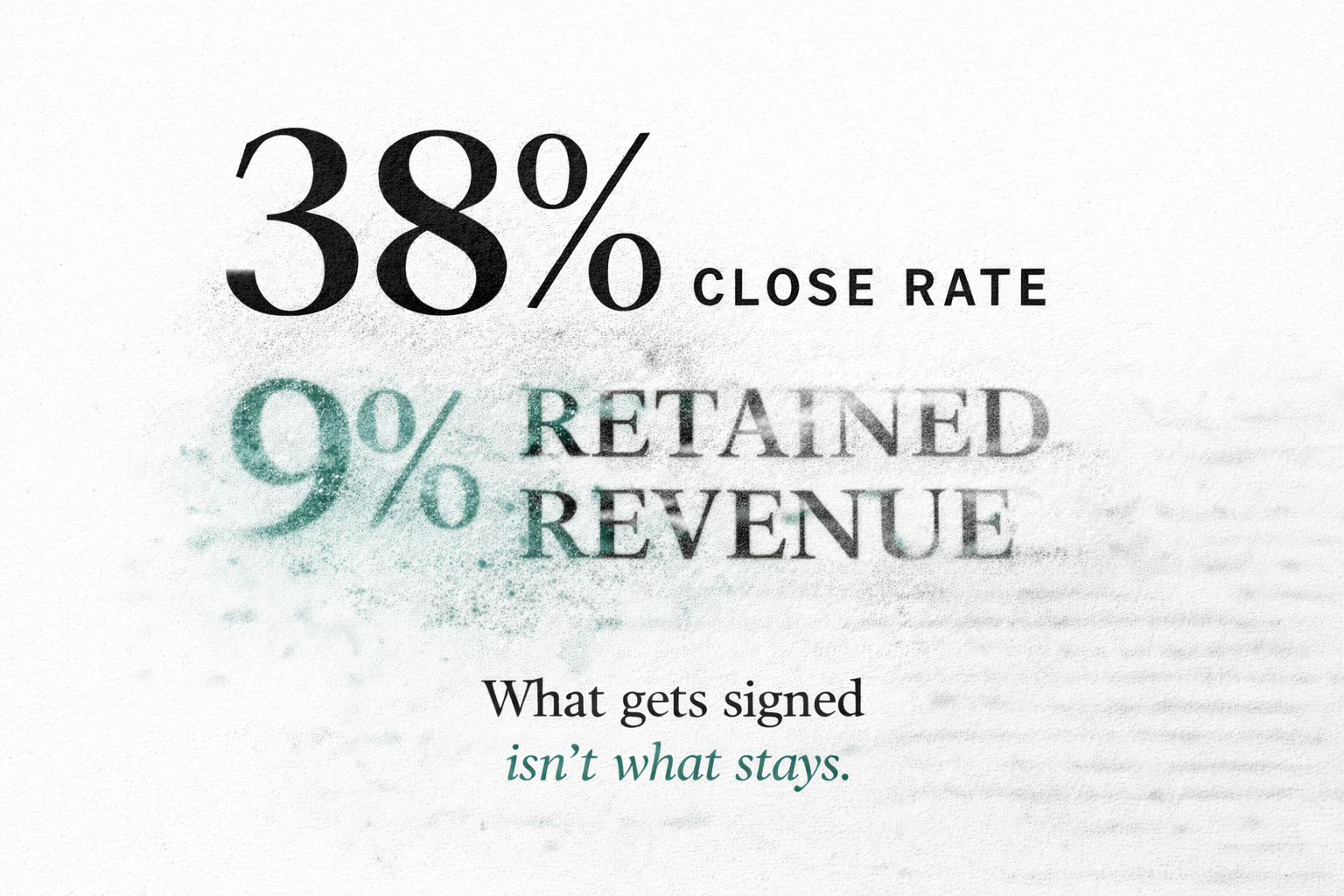
A rep who closes at 38% and cancels at 28% is not the same asset as a rep who closes at 32% and cancels at 9%.
The math looks different when you run it all the way through.
The first rep generates more signed contracts.
The second rep generates more retained revenue.
Those are not the same business.
What gets signed isn't what stays.
The signed contract is visible.
The cancellation comes later.
By the time it posts, the close rate conversation has already moved on.
So the high closer keeps getting referenced.
The pattern keeps getting rewarded.
The cancel rate sits in a different report that nobody connects back to rep performance.
This is not a performance problem.
It's a measurement problem.
The rep isn't hiding anything.
The system just isn't designed to show the full picture at the rep level. The same pattern surfaces when you read it by setter.
So decisions keep getting made on half the information.
Training dollars follow the close rate.
Incentive structures follow the close rate.
Territory decisions follow the close rate.
None of them account for what happens after the contract is signed.
The revenue that cancelled was already counted somewhere.
In a pipeline report.
In a projection.
In a conversation about what this month is going to look like.
And then it left.
Most teams already sense this dynamic exists.
They've seen the high closer who produces beautiful numbers in week one and headaches in week four.
They just don't have a clean way to see it at the rep level, consistently, over time.
So the close rate stays the story.
And the cancel rate stays a separate conversation.
Until someone puts them on the same line.
The data is already there. The visibility isn't. So the decisions stay wrong.