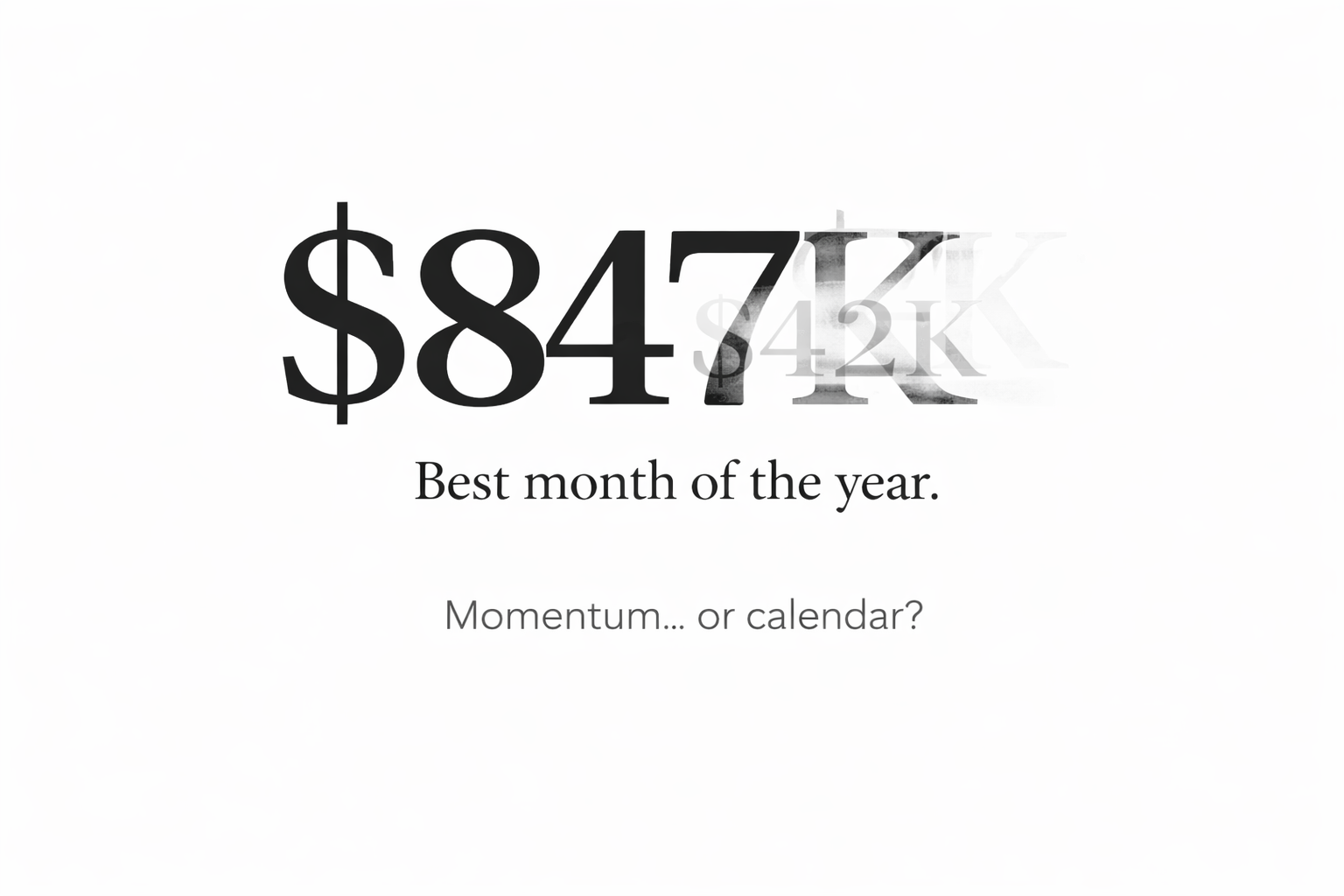
There's a moment that happens in almost every home improvement business.
A strong month closes.
The numbers look good.
Better than good.
And then the decisions start.
Add budget to the sources that performed.
Approve the headcount that's been on hold.
Scale what's working.
It feels like momentum.
It usually isn't.
Most strong months in this industry have a simpler explanation.
The calendar moved.
Demand in home improvement doesn't arrive evenly across the year.
It rises and falls in patterns.
Patterns that repeat.
Patterns that have nothing to do with what any one business did differently.
But when a strong month hits, it doesn't feel like seasonality.
It feels earned.
That's what makes it dangerous.
Because once it feels earned, people start building on top of it.
Budget shifts.
Commitments get made.
Expectations harden.
And then the next few months arrive.
And the numbers don't hold.
Not because anything broke.
Because the season moved.
That's where it gets expensive.
Not the strong month itself.
The decisions made because of it.
Budget added to a source that only looked exceptional in peak season.
Headcount added to absorb volume that was temporary.
Commitments made against a revenue picture that was never going to last.
The month told a story.
It just wasn't the story people thought they were reading.
The distinction that matters, between momentum and seasonality, almost never gets made in real time.
Because making it requires a comparison most businesses don't have in front of them.
Not last month versus this month.
Same source.
Same window.
That's the comparison that separates what the business did from what the calendar did.
Without it, the strong month becomes the explanation.
And the decisions keep following it.
Most companies aren't measuring the right window.
They're measuring the one that's easiest to see.
And sometimes, the easiest number to see is the one that misleads the most.
Most companies already have the data to see this. They just don't have a way to connect it.